
Certificate of Analysis
Independent analysis of this lot by Kovera Labs (HPLC-UV).
- Purity
- 99.7%
- Lot
- ML-260908
- Tested Most recent
- Sep 2026
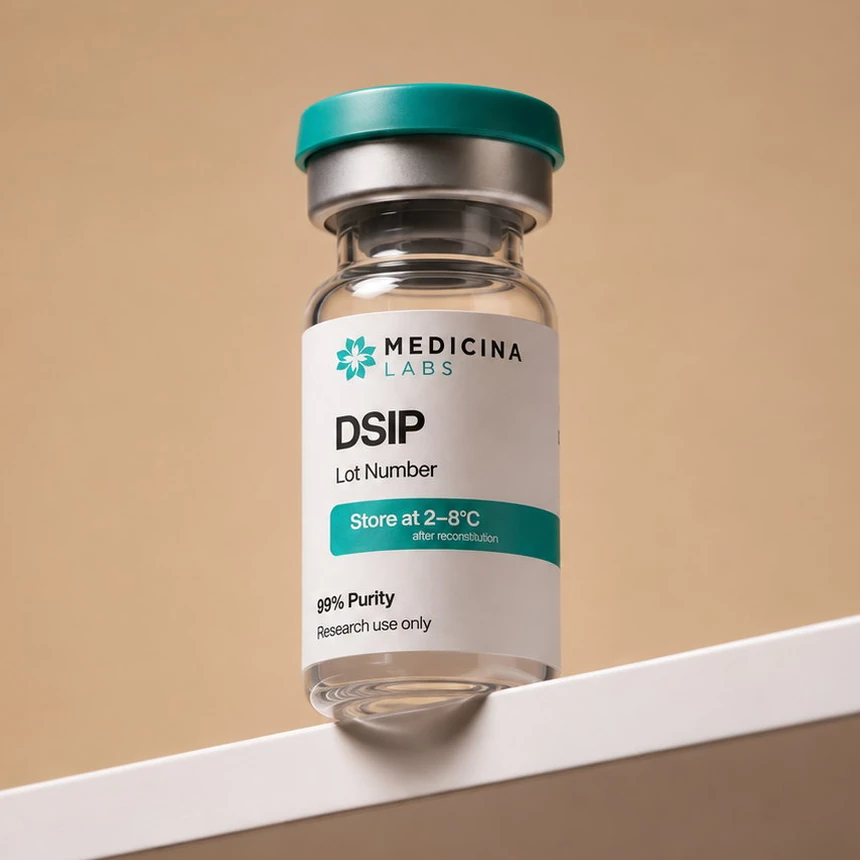
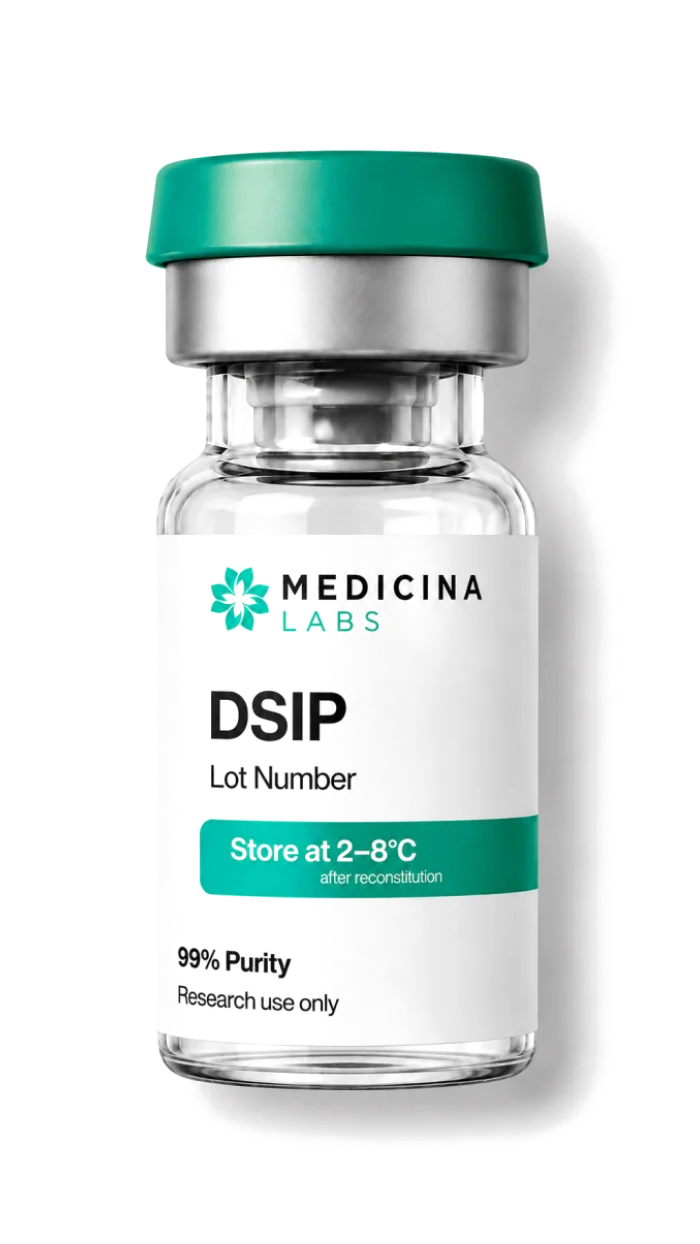
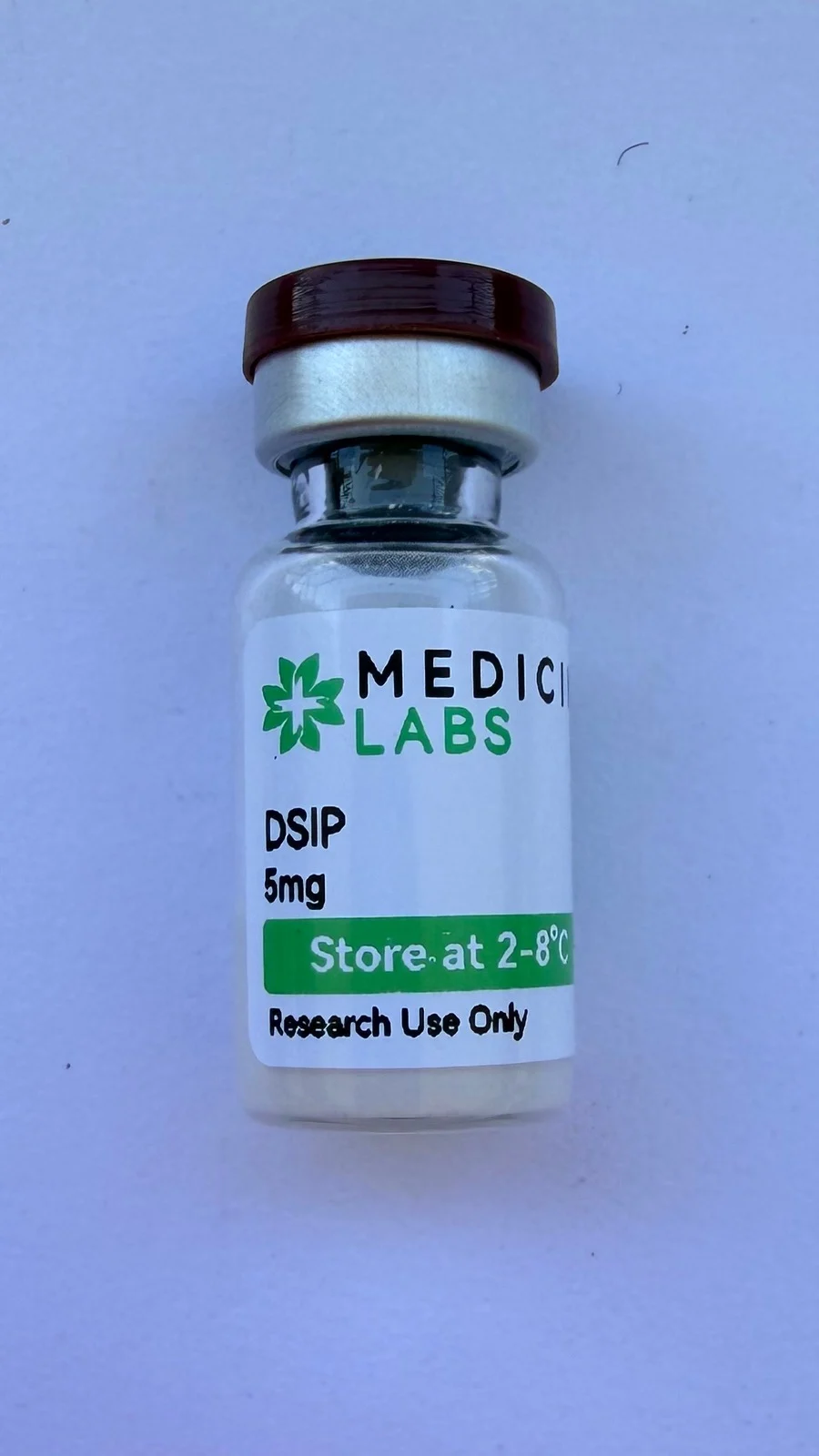
DSIP Peptide
In Stock- CAS
- 62568-57-4
- Molecular weight
- 848.81 g/mol
- Form
- Lyophilized powder
- Purity (HPLC)
- 99.7% HPLC-UV
- Storage
- -20°C or colder
- Lot / COA

- Free shippingOn every order
- Free 2nd Day AirOn orders $200+
Research Use Only
For laboratory research use only. Not for human consumption. All products are intended solely for laboratory research and are not for human or animal consumption. By purchasing, the buyer agrees to use these products in compliance with all applicable laws.
Specifications
- CAS
- 62568-57-4
- Molecular formula
- C35H48N10O15
- Molecular weight
- 848.81 g/mol
- Form
- Lyophilized powder
- Purity (HPLC)
- 99.7% HPLC-UV
- Storage
- -20°C or colder
- Lot / COA
- PubChem CID
- 68816
Certificate of Analysis
Independent analysis of this lot by Kovera Labs (HPLC-UV).
- Purity
- 99.7%
- Lot
- ML-260908
- Tested Most recent
- Sep 2026
DSIP Peptide Overview
DSIP peptide, named for the descriptor delta sleep-inducing peptide, is a small amphiphilic peptide consisting of nine amino acids (Trp-Ala-Gly-Gly-Asp-Ala-Ser-Gly-Glu) with demonstrated effects on circadian signaling and neuroendocrine regulation in experimental models. Originally identified through its ability to modulate delta-wave patterns in experimental systems, DSIP has been studied for its influence on circadian rhythms, electroencephalographic patterns, and hypothalamic-pituitary-adrenal (HPA) axis activity. Research indicates potential modulatory effects on GABAergic and serotonergic signaling systems, corticosterone and ACTH dynamics, and oxidative stress responses in laboratory settings.
Schoenenberger & Monnier (1977).
Related neuropeptide research materials in the Medicina Labs catalog include Semax and Selank.
For discovery history and the state of the evidence, see What Is DSIP?
History
DSIP was first isolated in 1977 by Monnier, Schoenenberger, and colleagues from the cerebral venous blood of rabbits during slow-wave induction experiments. Initial studies demonstrated that intraventricular administration of this peptide promoted delta-frequency EEG patterns consistent with slow-wave activity. Since its discovery, DSIP has been investigated across neuroscience, endocrinology, and circadian research disciplines for its diverse neuromodulatory properties.
DSIP Structure
CAS #: 62568-57-4
Molecular Formula: C35H48N10O15
Molecular Weight: 848.81 g/mol
PubChem ID: 68816
Research Findings
DSIP has been examined in circadian and neuroendocrine research, with investigations focusing on EEG pattern modulation, HPA axis dynamics, neurotransmitter system interactions, and neuronal signaling effects in various experimental models. Studies explore its influence on circadian biology and molecular stress responses.
Key Areas of Research:
- Circadian: Delta-wave, REM modulation, entrainment
- Neuroendocrine: Corticosterone, ACTH, HPA axis
- Signaling: GABAergic, serotonergic, dopaminergic
- Neuronal: Oxidative stress, calcium dynamics, viability
Together, these findings demonstrate DSIP's multifaceted actions across circadian, endocrine, and neuronal signaling systems. As a naturally occurring neuropeptide, DSIP provides a research framework for examining circadian dynamics, stress adaptation mechanisms, and neuroendocrine integration in diverse experimental paradigms.
Schoenenberger & Monnier, Proceedings of the National Academy of Sciences, 1977
References
Our Process

Precision Lyophilization
Each batch is freeze-dried and sealed for stability until reconstitution.

Verified Purity
Every batch is third-party tested with HPLC and mass spectrometry.

Careful Fulfillment
Orders ship within 24 hours from our U.S. facility.