
Certificate of Analysis
Independent analysis of this lot by Kovera Labs (HPLC-UV).
- Purity
- 99.34%
- Lot
- ML-260914
- Tested Most recent
- Sep 2026
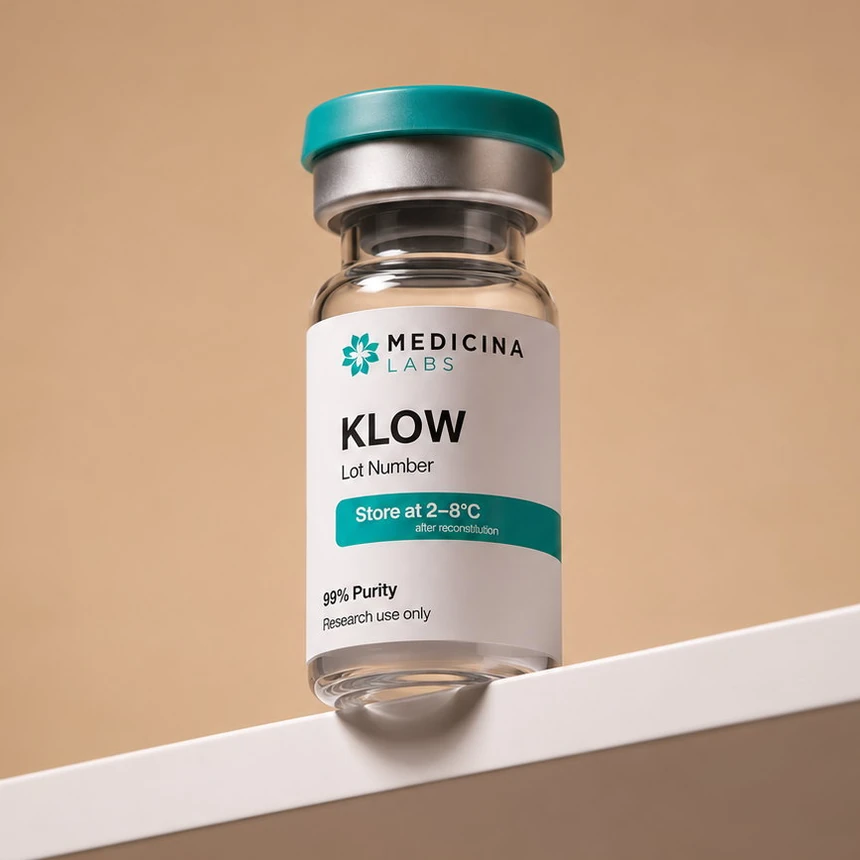
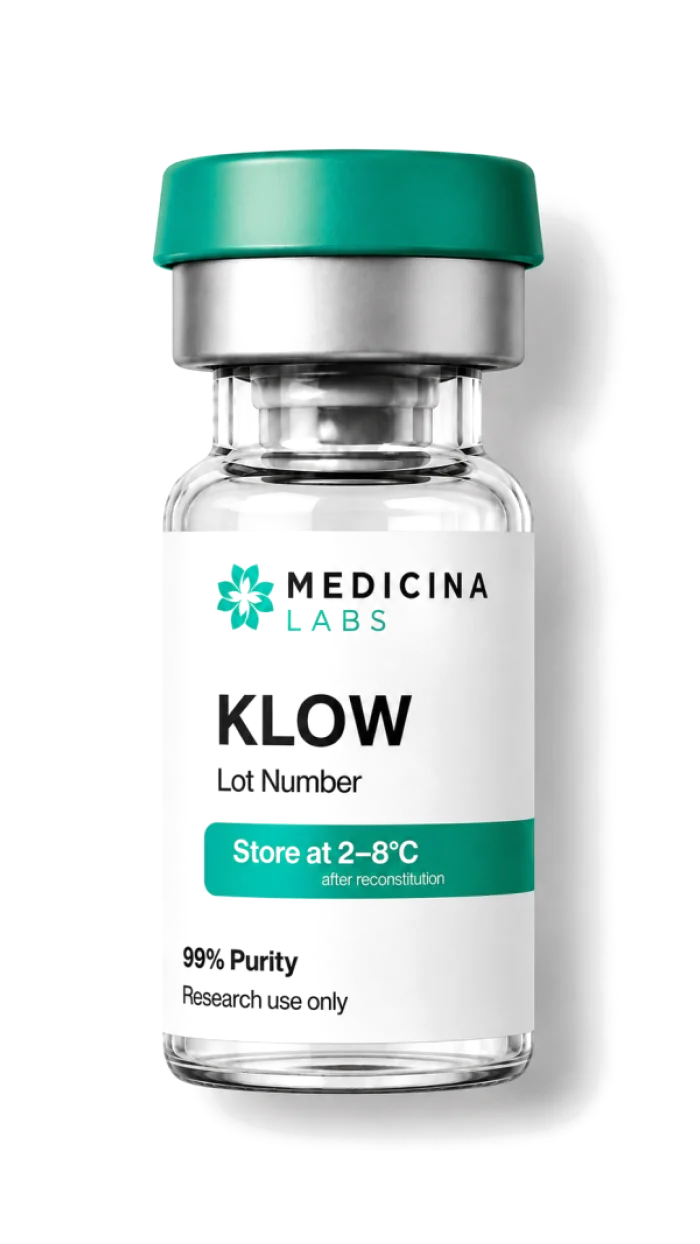
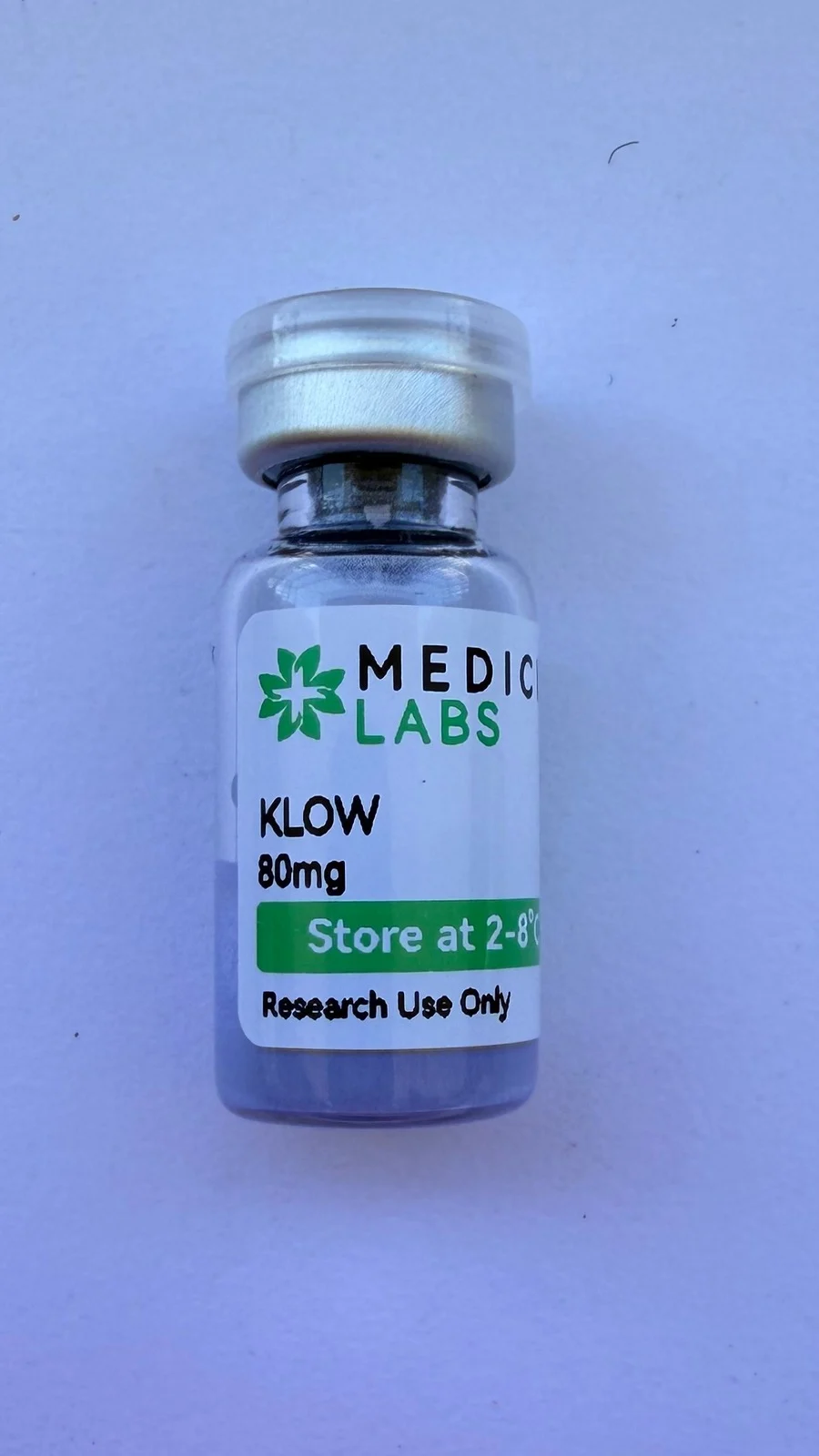
KLOW Peptide Blend
Blend
In Stock- Form
- Lyophilized powder
- Purity (HPLC)
- 99.34% HPLC-UV
- Storage
- -20°C or colder
- Lot / COA
- BPC-15710mg
- GHK-Cu50mg
- TB-50010mg
- KPV10mg

- Free shippingOn every order
- Free 2nd Day AirOn orders $200+
Research Use Only
For laboratory research use only. Not for human consumption. All products are intended solely for laboratory research and are not for human or animal consumption. By purchasing, the buyer agrees to use these products in compliance with all applicable laws.
Specifications
- Composition
- BPC-157 10mg + GHK-Cu 50mg + TB-500 10mg + KPV 10mg
- Form
- Lyophilized powder
- Purity (HPLC)
- 99.34% HPLC-UV
- Storage
- -20°C or colder
- Lot / COA
Certificate of Analysis
Independent analysis of this lot by Kovera Labs (HPLC-UV).
- Purity
- 99.34%
- Lot
- ML-260914
- Tested Most recent
- Sep 2026
KLOW Peptide Blend Overview
The KLOW peptide blend combines four research peptides — GHK-Cu, BPC-157, TB-500, and KPV — in a single formulation. The individual constituents have been studied separately in laboratory and preclinical research contexts, where they have been investigated for their effects on matrix remodeling, angiogenesis, cytokine modulation, and extracellular matrix activity.
Pickart L. & Margolina A. 2018
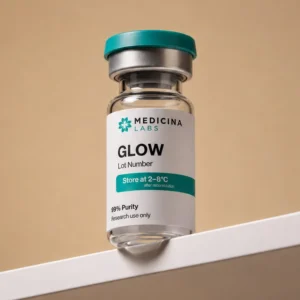
For how this formulation differs from GLOW in composition, see GLOW vs KLOW.
History
The KLOW Blend draws on several decades of peptide research. GHK-Cu, first identified in biological plasma samples in the 1970s, has been studied for gene expression and matrix signaling. BPC-157, synthesized in the 1990s as a gastric protein fragment analog, has been explored for angiogenic and structural processes. TB-500, the synthetic thymosin beta-4 sequence whose research lineage dates to the 1960s, has been examined for angiogenesis and molecular migration. KPV, a C-terminal fragment of α-MSH, has been evaluated for cytokine-modulating and immunomodulatory activity. Collectively, these peptides represent areas of ongoing investigation into experimental biology, vascular pathways, and immune signaling. The KLOW Blend is intended for research use only.
GHK-Cu Structure
CAS #: 89030-95-5
Molecular Formula: C14H23CuN6O4+
Molecular Weight: 402.92 g/mol
PubChem ID: 71587328
BPC-157 Structure
CAS #: 137525-51-0
Molecular Formula: C62H98N16O22
Molecular Weight: 1419.5 g/mol
PubChem ID: 9941957
TB-500 Structure
CAS #: 77591-33-4
Molecular Formula: C212H350N56O78S
Molecular Weight: 4963.5 g/mol
KPV Structure
CAS #: 67727-97-3
Molecular Formula: C16H30N4O4
Molecular Weight: 342.43 g/mol
PubChem ID: 125672
Research Findings
The individual constituents of the KLOW Blend — GHK-Cu, BPC-157, TB-500, and KPV — have been studied separately in laboratory and preclinical research contexts, including structural, vascular, epithelial, and systemic models. That research has examined collagen formation, extracellular matrix remodeling, angiogenesis, molecular migration, and cytokine modulation.
Key Areas of Research:
- Structural: Collagen, matrix, connective signaling
- Vascular: Angiogenesis, nitric oxide, remodeling
- Epithelial: Migration, matrix signaling, follicle dynamics
- Systemic: Cytokine modulation, immune signaling, pathway dynamics
These findings relate to the individual constituents; the studies cited on this page did not examine the finished KLOW Blend.
Analytically, the four constituents span two orders of magnitude in size: KPV is a Lys-Pro-Val tripeptide (342.43 g/mol), GHK-Cu is a copper-coordinated tripeptide (402.92 g/mol), BPC-157 is a 15-amino-acid linear peptide (1419.5 g/mol), and TB-500 is listed at 4963.5 g/mol. These differences in molecular weight and composition are relevant to chromatographic separation and identity characterization of a multi-component formulation.
References
Pickart L. et al. (2015). Biomed Res Int, 2015:648108. PubMed ID 26236730.
Japjec M. et al. (2021). Biomedicines, 9(11). PubMed ID 34829776.
Seiwerth S. et al. (2018). Curr Pharm Des, 24(18):1972–1989. PubMed ID 29998800.
Hsieh M.J. et al. (2017). J Mol Med (Berl), 95(3):323–333. PubMed ID 27847966.
Our Process

Precision Lyophilization
Each batch is freeze-dried and sealed for stability until reconstitution.

Verified Purity
Every batch is third-party tested with HPLC and mass spectrometry.

Careful Fulfillment
Orders ship within 24 hours from our U.S. facility.