
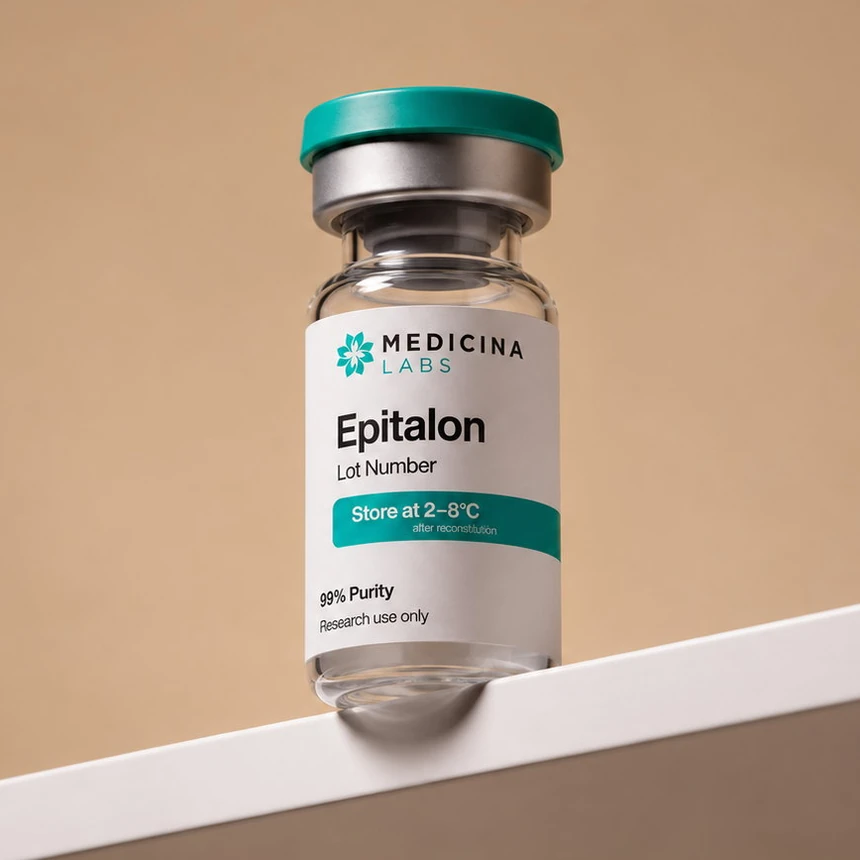
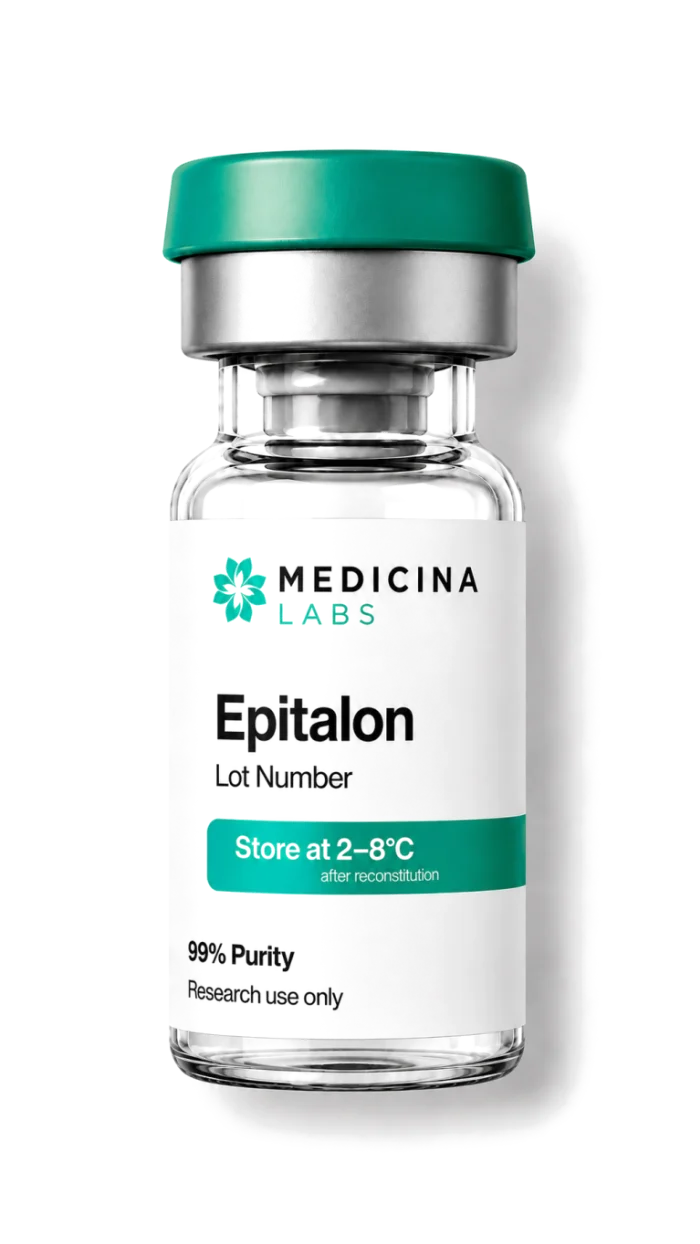
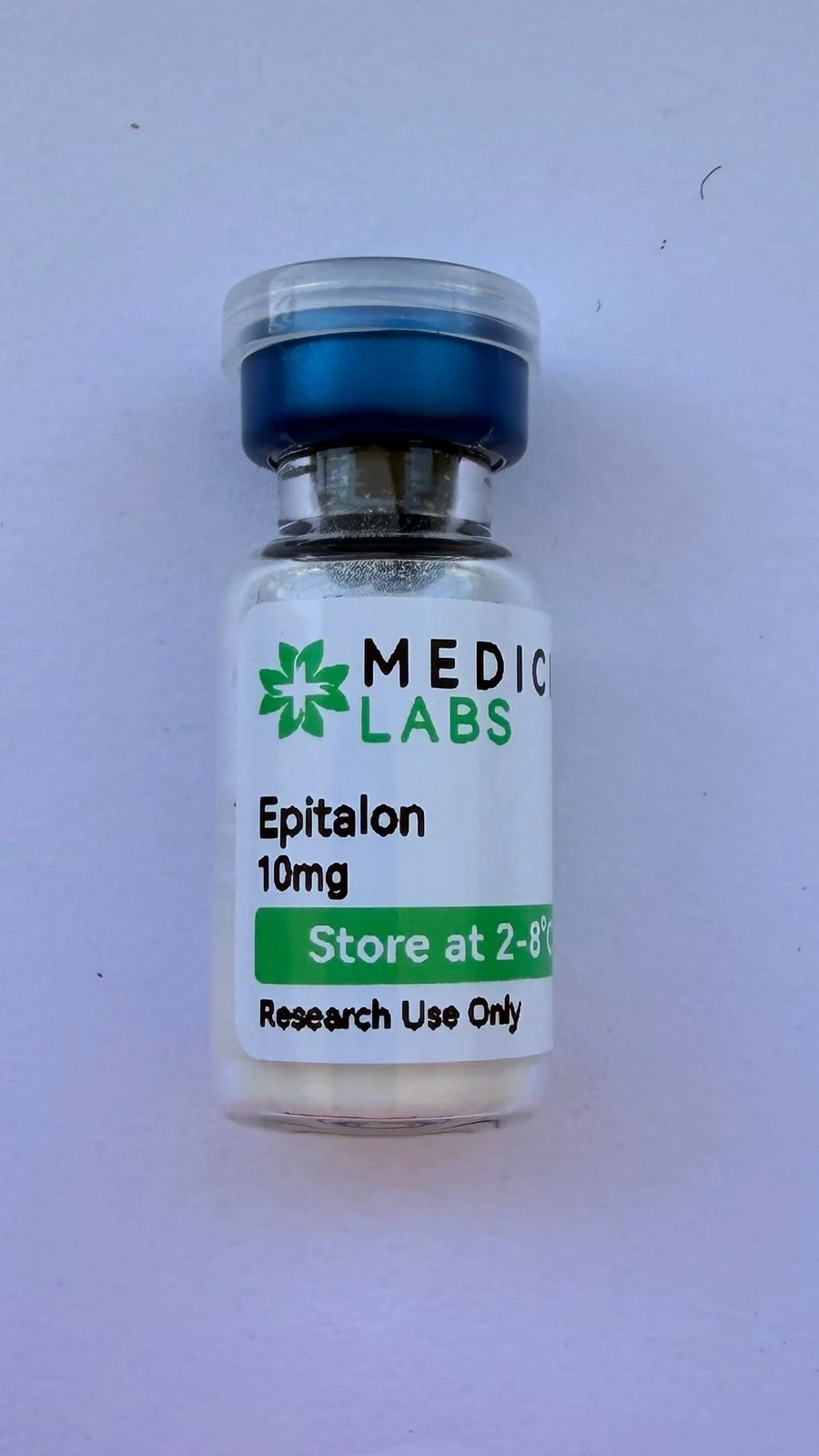
Certificate of Analysis
Independent analysis of this lot by Kovera Labs (HPLC-UV).
- Purity
- 99.69%
- Lot
- ML-260909
- Tested Most recent
- Sep 2026
Epitalon Peptide
In Stock- CAS
- 307297-39-8
- Molecular weight
- 390.35 g/mol
- Form
- Lyophilized powder
- Purity (HPLC)
- 99.69% HPLC-UV
- Storage
- -20°C or colder
- Lot / COA

- Free shippingOn every order
- Free 2nd Day AirOn orders $200+
Research Use Only
For laboratory research use only. Not for human consumption. All products are intended solely for laboratory research and are not for human or animal consumption. By purchasing, the buyer agrees to use these products in compliance with all applicable laws.
Specifications
- CAS
- 307297-39-8
- Molecular formula
- C14H22N4O9
- Molecular weight
- 390.35 g/mol
- Form
- Lyophilized powder
- Purity (HPLC)
- 99.69% HPLC-UV
- Storage
- -20°C or colder
- Lot / COA
- PubChem CID
- 219042
Certificate of Analysis
Independent analysis of this lot by Kovera Labs (HPLC-UV).
- Purity
- 99.69%
- Lot
- ML-260909
- Tested Most recent
- Sep 2026
Epitalon Peptide Overview
Epitalon peptide, also written Epithalon, is a synthetic tetrapeptide composed of the amino-acid sequence Ala-Glu-Asp-Gly (AEDG). It has been studied in laboratory models examining replicative senescence, gene-expression dynamics, oxidative processes, and telomere-associated pathways. Because of its short peptide sequence and reported activity in cellular signaling models, Epitalon has become a subject of research involving telomere-maintenance pathways and cellular regulation.
Khavinson V.Kh. et al. (2003).
Pinealon is a related short peptide bioregulator from the same Khavinson research programme, also supplied in the Medicina Labs catalog.
History
Epitalon originated from peptide bioregulation research led by Vladimir Khavinson and collaborators. It was synthesized as a short peptide related to naturally occurring peptide fractions associated with the pineal gland. Subsequent investigations examined its interaction with replicative-senescence processes, including telomerase activity and telomere dynamics in cultured cells.
Research published in the early 2000s reported telomerase activation and telomere elongation in experimental human cell cultures exposed to Epitalon, prompting continued investigation into the peptide's effects on cellular regulation and replicative biology.
Epitalon Structure
CAS #: 307297-39-8
Molecular Formula: C14H22N4O9
Molecular Weight: 390.35 g/mol
PubChem ID: 219042
Research Findings
Epitalon has been investigated in cellular, genomic, and senescence-related experimental models. Published studies have examined telomerase expression, telomere length, replicative capacity, and regulatory pathways associated with replicative senescence.
Key Areas of Research:
- Cellular: Replicative dynamics, senescence markers, viability
- Telomere: Telomerase activity, telomere length, hTERT expression
- Molecular: Gene expression, signaling pathways, regulation
- Systemic: Senescence-associated signaling and pathway regulation
Together, these findings make Epitalon a research tool of interest for investigations into telomere biology and molecular processes associated with cellular senescence. More recent cell-culture research has continued to examine the relationship between Epitalon exposure, hTERT expression, telomerase activity, and alternative telomere-lengthening pathways.
References

Our Process

Precision Lyophilization
Each batch is freeze-dried and sealed for stability until reconstitution.

Verified Purity
Every batch is third-party tested with HPLC and mass spectrometry.

Careful Fulfillment
Orders ship within 24 hours from our U.S. facility.