
Certificate of Analysis
Independent analysis of this lot by Kovera Labs (HPLC-UV).
- Purity
- 99.87%
- Lot
- ML-260915
- Tested Most recent
- Sep 2026
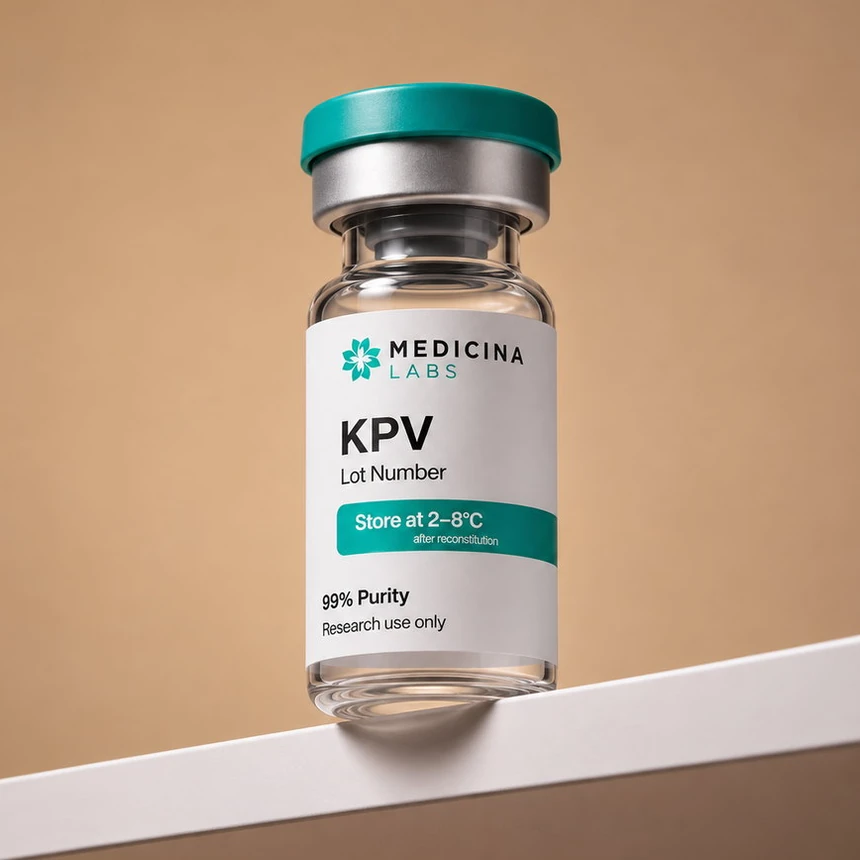
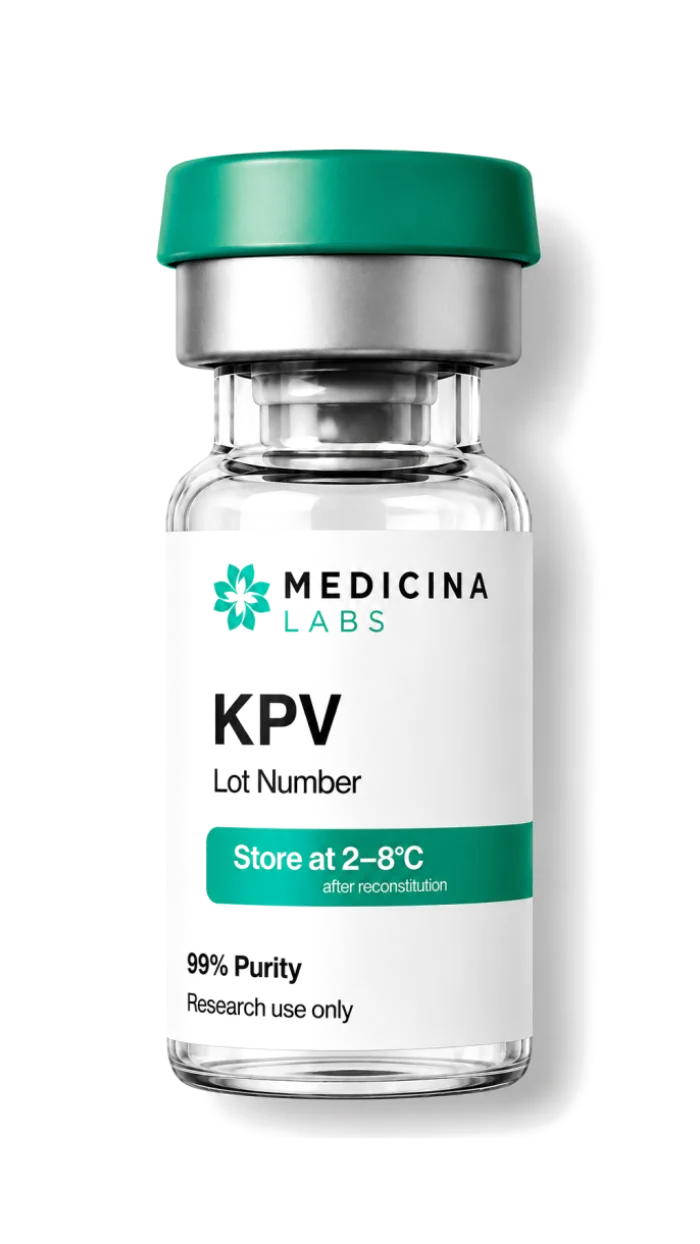
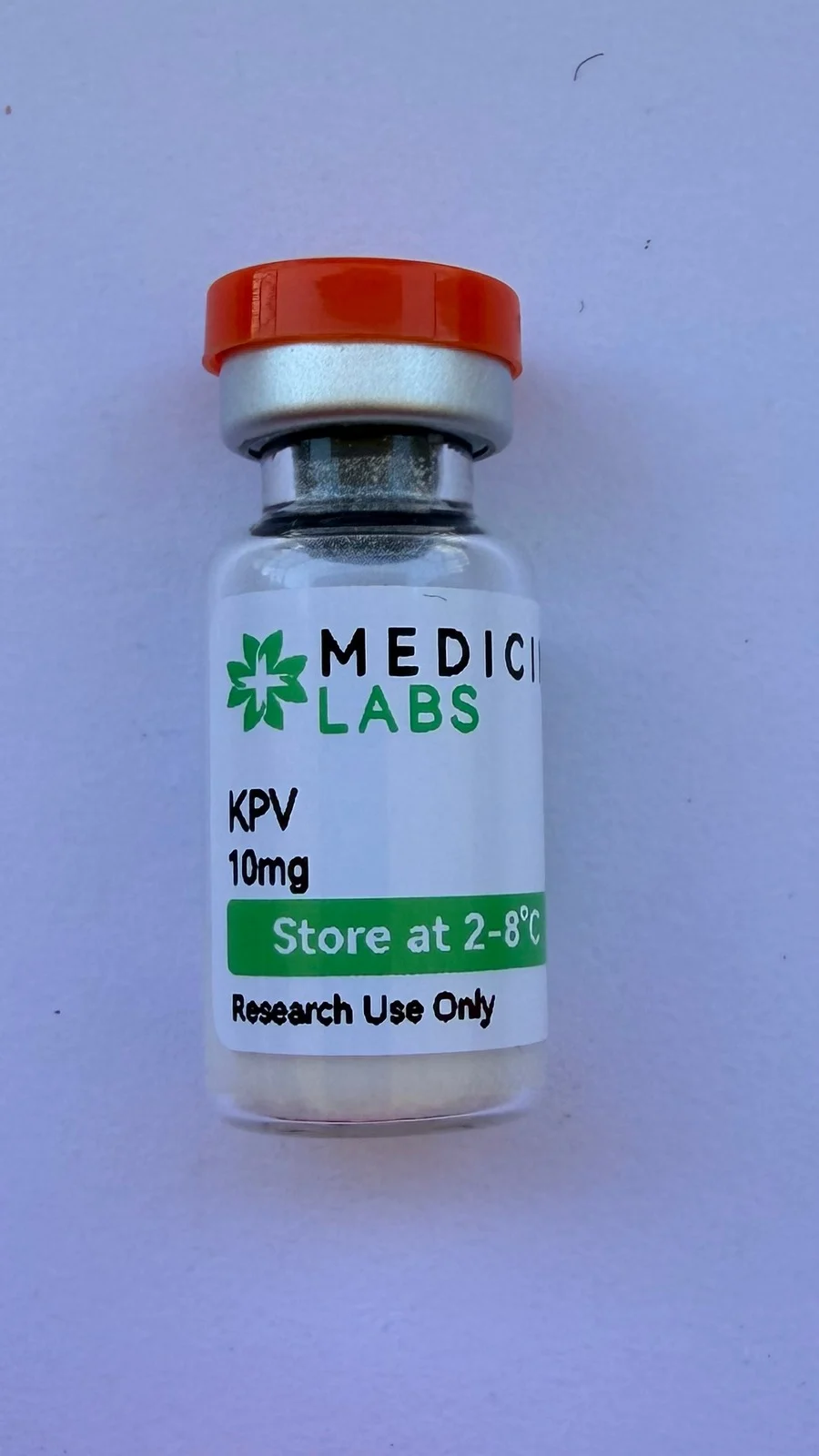
KPV Peptide
In Stock- CAS
- 67727-97-3
- Molecular weight
- 342.43 g/mol
- Form
- Lyophilized powder
- Purity (HPLC)
- 99.87% HPLC-UV
- Storage
- -20°C or colder
- Lot / COA

- Free shippingOn every order
- Free 2nd Day AirOn orders $200+
Research Use Only
For laboratory research use only. Not for human consumption. All products are intended solely for laboratory research and are not for human or animal consumption. By purchasing, the buyer agrees to use these products in compliance with all applicable laws.
Specifications
- CAS
- 67727-97-3
- Molecular formula
- C16H30N4O4
- Molecular weight
- 342.43 g/mol
- Form
- Lyophilized powder
- Purity (HPLC)
- 99.87% HPLC-UV
- Storage
- -20°C or colder
- Lot / COA
- PubChem CID
- 125672
Certificate of Analysis
Independent analysis of this lot by Kovera Labs (HPLC-UV).
- Purity
- 99.87%
- Lot
- ML-260915
- Tested Most recent
- Sep 2026
KPV Peptide Overview
The KPV peptide (Lys-Pro-Val) is a small tripeptide derived from the C-terminus of α-MSH (residues 11–13) that retains signaling activity while lacking melanotropic effects. Through PepT1-mediated uptake in epithelial and macrophage models, KPV directly accesses intracellular compartments where it modulates NF-κB signaling and reduces expression of key cytokines including TNF-α, IL-1β, IL-6, and IL-8. Research models examine KPV's effects on cytokine signaling cascades, epithelial barrier dynamics through tight junction protein regulation, mucosal modeling in experimental systems, and antimicrobial properties in laboratory settings.
Dalmasso et al. (2008). Luger & Brzoska (2007).
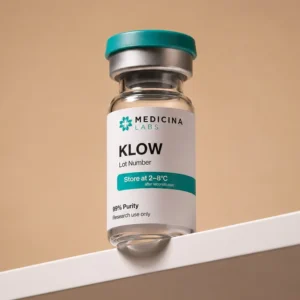
KPV is also supplied as one constituent of the KLOW research formulation.
History
The cytokine-modulating properties of the KPV sequence were first identified in the late 1980s through structure-activity studies of α-MSH by Hiltz, Lipton, and colleagues. Systematic truncation experiments demonstrated that this C-terminal tripeptide retained significant immunomodulatory activity despite its minimal size, representing the smallest effective sequence for cytokine-modulating action. Subsequent mechanistic studies by Dalmasso et al. in 2008 elucidated the PepT1-mediated epithelial uptake mechanism, establishing KPV's potential for targeting signaling pathways in experimental mucosal models.
KPV Structure
Sequence: Lys-Pro-Val (L-lysyl-L-prolyl-L-valine)
CAS #: 67727-97-3
Molecular Formula: C16H30N4O4
Molecular Weight: 342.43 g/mol
PubChem ID: 125672
Research Findings
KPV has been extensively studied in cytokine signaling research, with investigations focusing on NF-κB pathway modulation, epithelial signaling models, barrier dynamics, and immune modulation in various experimental systems. Studies examine both its unique transporter-mediated delivery and potent cytokine-modulating mechanisms.
Key Areas of Research:
- Cytokine: NF-κB, MAPK, suppression
- Epithelial: Mucosal signaling, modeling
- Barrier: Tight junction, permeability, integrity
- Immune: Peptide-receptor, macrophage, T-cell
Together, these investigations demonstrate KPV's multifaceted cytokine-modulating actions through PepT1-mediated uptake and direct intracellular signaling modulation. As a minimal bioactive sequence, KPV provides a research framework for examining peptide-based cytokine mechanisms, epithelial immune signaling, and barrier dynamics in diverse experimental models.
Dalmasso et al., Gastroenterology, 2008
Our Process

Precision Lyophilization
Each batch is freeze-dried and sealed for stability until reconstitution.

Verified Purity
Every batch is third-party tested with HPLC and mass spectrometry.

Careful Fulfillment
Orders ship within 24 hours from our U.S. facility.