
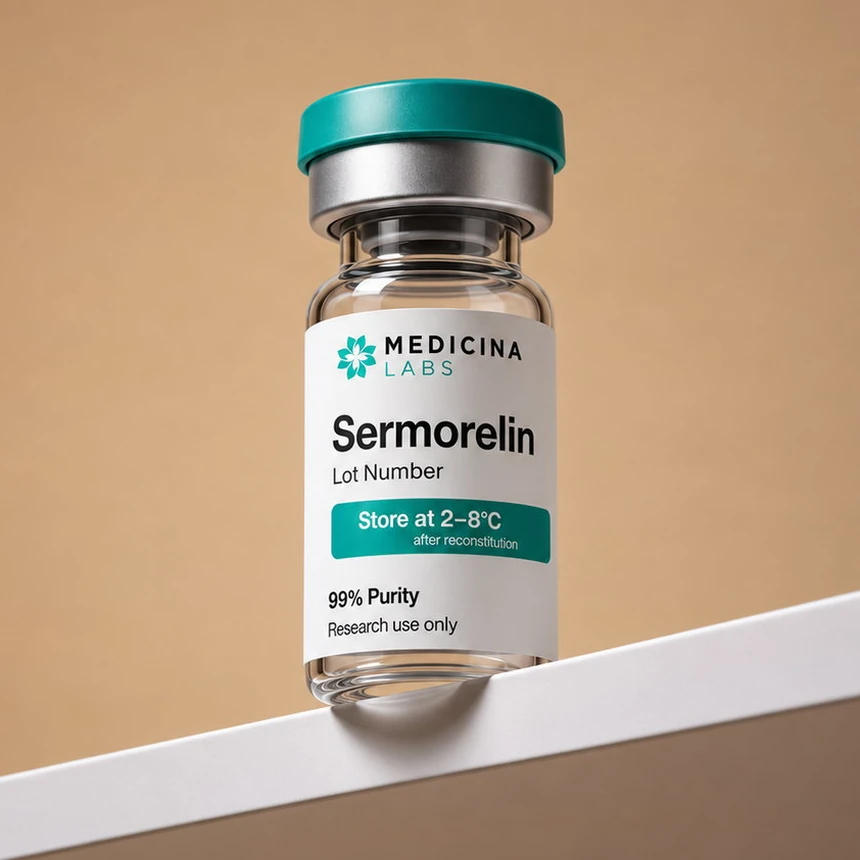
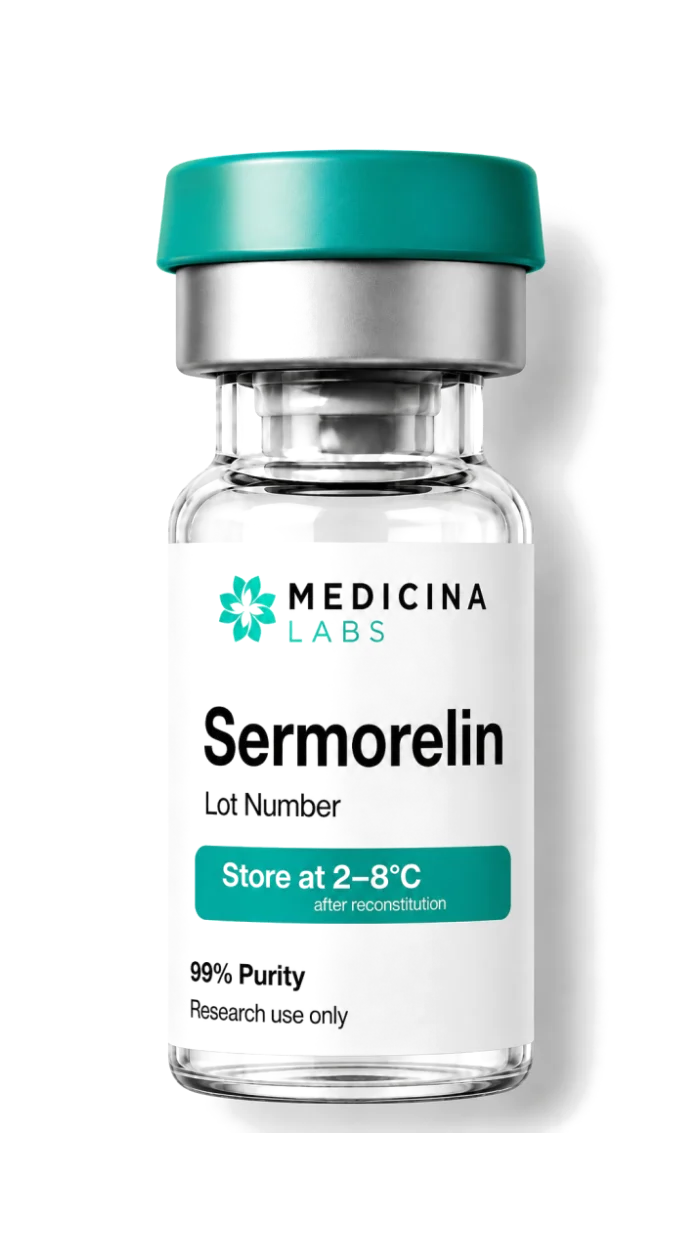
Sermorelin
Out of Stock- CAS
- 86168-78-7
- Molecular weight
- 3357.9 g/mol
- Form
- Lyophilized powder
- Purity (HPLC)
- COA pending
- Storage
- -20°C or colder
- Lot / COA
- Pending

- Free shippingOn every order
- Free 2nd Day AirOn orders $200+
Research Use Only
For laboratory research use only. Not for human consumption. All products are intended solely for laboratory research and are not for human or animal consumption. By purchasing, the buyer agrees to use these products in compliance with all applicable laws.
Specifications
- CAS
- 86168-78-7
- Molecular formula
- C149H246N44O42S
- Molecular weight
- 3357.9 g/mol
- Form
- Lyophilized powder
- Purity (HPLC)
- COA pending
- Storage
- -20°C or colder
- Lot / COA
- Pending
- PubChem CID
- 16132413
Sermorelin Overview
Sermorelin is a synthetic 29-amino-acid peptide corresponding to the biologically active N-terminal fragment of human growth hormone-releasing hormone (GHRH). Also described as GHRH(1-29)-NH2, Sermorelin retains the receptor-activating region of the naturally occurring 44-amino-acid GHRH peptide and has been studied extensively in endocrine and pituitary signaling models.
Research involving the Sermorelin peptide has focused on GHRH receptor activation, anterior pituitary signaling, somatotroph response, and downstream growth hormone-associated pathways.
A related GHRH-analog research peptide in the Medicina Labs catalog is CJC-1295 (No DAC).
History
The development of Sermorelin followed the identification and characterization of naturally occurring human GHRH in the early 1980s. Researchers determined that the first 29 amino acids of GHRH contain the peptide's principal biological activity, allowing a shorter synthetic fragment to be produced for experimental investigation.
Early studies demonstrated that synthetic GHRH(1-29)-NH2 retained substantial biological activity compared with longer GHRH fragments. This led to extensive investigation of the 29-amino-acid sequence in receptor pharmacology, pituitary biology, endocrine signaling, and structure-activity studies.
Sermorelin subsequently became an important reference peptide for studying the GHRH receptor and the regulatory relationship between hypothalamic signaling and anterior pituitary somatotroph activity.
Sermorelin Structure
CAS #: 86168-78-7
Molecular Formula: C149H246N44O42S
Molecular Weight: 3357.9 g/mol
PubChem ID: 16132413
Amino Acid Sequence: Tyr-Ala-Asp-Ala-Ile-Phe-Thr-Asn-Ser-Tyr-Arg-Lys-Val-Leu-Gly-Gln-Leu-Ser-Ala-Arg-Lys-Leu-Leu-Gln-Asp-Ile-Met-Ser-Arg-NH2
Research Findings
Sermorelin has been investigated across endocrine, pituitary, receptor, and molecular signaling models. Experimental studies have demonstrated that GHRH(1-29)-NH2 can activate physiological signaling associated with GHRH while providing a shorter molecular platform for examining peptide-receptor relationships.
Key Areas of Research:
- Endocrine: GHRH-associated signaling and regulatory pathways
- Pituitary: Somatotroph activity and anterior pituitary response
- Receptor: GHRH receptor activation and ligand-receptor dynamics
- Molecular: Peptide structure-activity relationships and signaling
- Systemic: Hypothalamic-pituitary regulatory pathway characterization
Structure-activity studies involving GHRH(1-29)-NH2 have also identified individual amino-acid positions that contribute substantially to receptor activation, allowing researchers to examine how peptide conformation, helicity, and specific residues affect biological activity.
Together, these findings make Sermorelin a well-characterized research peptide for examining GHRH receptor biology, somatotroph signaling, and communication between hypothalamic and anterior pituitary pathways.
Our Process

Precision Lyophilization
Each batch is freeze-dried and sealed for stability until reconstitution.

Verified Purity
Every batch is third-party tested with HPLC and mass spectrometry.

Careful Fulfillment
Orders ship within 24 hours from our U.S. facility.